
2018 ESCHM-ISCH-ISB
1st World Congress of The European Society for Clinical Hemorheology and Microcirculation, The International Society for Clinical Hemorheology, and The International Society of Biorheology
July 2-6, 2018
Kraków, Poland
It is our great pleasure to invite You to the Joint Conference of Three Societies: The European Society for Clinical Hemorheology and Microcirculation, The International Society of Clinical Hemorheology and The International Society of Biorheology (ESCHM-ISCH-ISB-2018) to be held on July 2-6, 2018 in Krakow, Poland.
The Conference aims to cover a broad spectrum of topics in bio- and hemo-rheology, from both basic science and clinical investigations points of view. It also aims at providing opportunities for intense interaction of young researchers with the established experts in the field. Additionally, a variety of social activities will be offered including an opening reception, a banquet and a conference tour.
The site of the Conference, the City of Krakow, is one of the most important historical, cultural and tourist centers of Poland and Central Europe. Krakow, with its alluring attractions mixed in optimal proportions, has it all to attract millions of tourists a year.
We look forward to meeting you in Krakow, Poland in July, 2018.
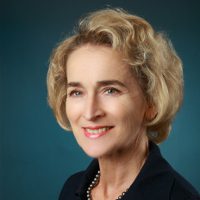
Maria Fornal
PTHiM, Jagiellonian University Medical College, Poland
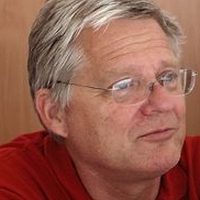
Jean Frederic Brun
ESCHM, French Institute of Health and Medical Research, France
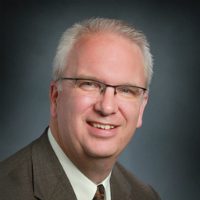
Peter Butler
ISB, Penn State University, USA
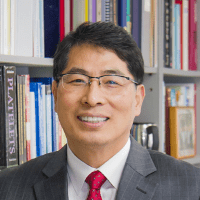
Sehyun Shin
ISCH, Korea University, Korea
Important Dates
Abstract submission for Symposia May 3, 2018
Abstract submission for free communication April 15, 2018
Early registration May 1, 2018
Deadline for Presentation Contents June 11, 2021
Program
Download full program PDF
4.5Mb
Scientific Program Committee
Jean-Frederic Brun France, ESCHM Chair
Peter Butler USA, ISB Chair
Brian M. Cooke Australia, ISCH Chair
Tomasz Grodzicki Poland, Jagiellonian Univ. Med. Colleage, Rector
Sehyun Shin Korea, ISCH Chair
Tamas Alexy (USA)
Vayá Amparo (Spain)
Nadia Antonova (Bulgaria)
Lajos Bogar (Hungary)
Kvetoslava Burda (Poland)
Gregorio Caimi (Italy)
Tze-Wen Chung (Taiwan)
Dirk Clevert (Germany)
Guy Cloutier (Canada)
Philippe Connes (France)
Brian M. Cooke (Australia)
Zbigniew Dąbrowski (Poland)
Dmitry Fedosow (Germany)
Bingmei Fu (USA)
Jerzy Gąsowski (Poland)
Tommaso Gori (Italy)
Marijke Grau (Germany)
Friedrich Jung (Germany)
Marina Kameneva (USA)
Michael King (USA)
Akos Koller (USA/Hungary)
Wojciech Kwiatek (Poland)
Byoung K. Lee (Korea)
F. Liao (China)
C-T Lim (Singapore)
Herbert Lipowsky (USA)
Mian Long (China)
Herbert Meiselman (USA)
Alexei Muravyov(Russia)
Gerard Nash (UK)
Norbert Nemeth (Hungary)
Lukasn Prantyl (Germany)
Axel Pries (Germany)
Alexander Priezzhev (Russia)
Michael Rampling (UK)
Walter Reinhart (Switzerland)
Eugene Roitman (Russia)
Carlota Saldanha (Portugal)
Masaaki Sato (Japan)
Geert Schmidt-Schonbein (USA)
Tim Secomb (USA)
Sergey Shevkoplyas (USA)
Masako Sugihara-Seki (Japan)
Kalman Toth (Hungary)
J. L.Wautier (France)
Ursula Winberger (Austria)
Olzem Yalcin (Turkey)
Sung Yang (Korea)
Local Organizing Committee
Maria Fornal Chair, PTHiM, Jagiellonian University Medical College
Anna Kańtoch Scientific Secretary, PTHiM, Jagiellonian University Medical College
Ewelina Nowak Scientific Secretary, PTHiM, Jagiellonian University Medical College
Zbigniew Dąbrowski PTHiM, University of Physical Education in Krakow
Katarzyna Pogoda PTHiM, IFJ PAN, Krakow
Preliminary Topics of Scientific Sessions
- Biorheology and Biotechnology
- Biorheology and Cancer
- Cellular Rheology and Biophysics
- Clinical Hemorheology
- Multiple Organ Damage: A Hemorheological Approach
- Micro/Nano Biomechanics
- Endothelial Function and Shear Stress
- Hemorheology and Hemoglobinopathies
- Hemorheology and Vascular Diseases
- Red blood cell Aggregation
- Red Blood Cell Deformability
- Role of Nitric Oxide in Biorheology
- Thrombus formation and Mechanics
- Rheological Behavior of Bio-materials
- Molecular Rheology
- Exercise Hemorheology
- Computational Hemodynamics and Hemorheology
- Modeling of Cell Dynamics: Cytoskeleton and Membrane
- Disease and Hemorheology
- Flow Visualization and Modeling
Social Events
Opening Ceremony
Monday, July 2, 18.00 - 22.00
Conference venue - Auditorium Maximum
33, Krupnicza street
18.00 - 19.00 - Opening Ceremony with Polish folklore show
19.30 - 21.00 - Welcome Reception at Town Hall (3/4, Wszystkich Świętych)
Town Hall is located in Wielopolski Mansion – called a palace. It was built in the first half of the 16th century, as an elegant Renaissance residence. Windows with characteristic divisions and stone frames and a crenellated parapet wall survive from that period. In 1864, the Palace was purchased by the Municipality of Krakow as headquarters for the Municipal Offices. The ballroom on the second floor was at that time replaced by the elegant Assembly Hall. The rooms used for official functions were decorated in historicist style in the spirit of the Viennese Art Nouveau making use of motives taken from folk art. In 1926, the Main Assembly Hall was consumed by fire yet was meticulously restored within the space of several months, respecting the original designs, but at the same time embellishing them in Art Deco style, fashionable at the time.
Dress code: Informal
Meet the Old Krakow
Wednesday, July 4, 17.00 – 21.00
The Jagiellonian University Museum "Collegium Maius" 15, Jagiellońska street
17.00 - 19.30 - sightseeing of Collegium Maius (the Jagiellonian University Museum) and walking tour around the Old Town of Krakow with city guide
19.30 - 21.00 - sightseeing and organ concert in the St. Mary's Basilica
Jagiellonian University’s oldest building (and one of the oldest in Kraków), Collegium Maius was built as the university’s main campus in the late 14th century, 36 years after the university’s founding. A century later it was redesigned as the late-Gothic structure surrounding the picturesque arcaded courtyard that has survived to this day. While professors lived and worked upstairs, it was in the ground floor lecture halls that Nicolaus Copernicus made doodles in the margins of his notebooks in the 1490s.
The Bazylika Mariacka (Saint Mary's Basilica) is undoubtedly one of Krakow's most famous and most spectacular landmarks. It towers over the northeast corner of the Main Market Square, its delicately sculpted turrets peeking over the roof of the Sukiennice (Cloth Hall), visible from all over the city. The church that can be seen today was raised around 1300, in early gothic style, and continued to be developed and enriched throughout the 14th century. Even on the scale of the Market Square, the brick gothic church is a towering edifice, yet its elegant exterior does not even hint at the colourful splendour to be found inside. The walls are covered in magnificent patterns (rich tones, heavy reds and deep blues, and ribbed with gold), hung with paintings and dotted with richly constructed alcoves, but the real jewel is the altarpiece, a stunning work of woodcarving created by Wit Stwosz in the late 15th century. Here, in the magnificent interior of Basilica, will be presented the organ classical music.
Banquet in the Wieliczka Salt Mine
Thursday, July 5, 17.30 – 23.00
Wieliczka Salt Mine
17.30 - meeting at the conference venue – bus transportation to the Salt Mine
18.00 – 20.00 – short tour around the Salt Mine
20.00 – 22.00 - banquet and return trip to Krakow
Gala dinner will be organized in the historic chambers of the Salt Mine considered one of the wonders of the world. Put by UNESCO on the World Cultural Heritage list in 1978. Tourist route on three levels of the mine covers ca half a mile of corridors, 20 chambers carved in salt, all on the depth from 70 to 135 m. St. Kinga’s Chapel is a breathtaking place - a church where everything is made of salt - crystal chandeliers, altars, sculptures and floor paving carved in the layer of salt.
The Mine is located at a distance of 0,5h’s trip from the conference facilities, therefore busses will bring the participants to Wieliczka. After the Gala Dinner busses will take the participants back to the hotels. The Dinner will be preceded by a brief (45 minutes) tour aiming at discovering the traditions and history of the Wieliczka Mine.
The Gala Dinner will take place in Haluszka Chamber characterized by a stunning combination of nature and… architecture. This is a chamber of an impressive size, which was exploited in the nineteenth century, with a total of 20,000 tons of salt excavated. Warszawa Chamber, located at 125 meters underground will give a new, unique dimension to the Symposium Gala Dinner.
Dress code: Informal/Formal - Bring warm clothing
The temperature underground is steady and ranges between 14° and 16° C.
Tour is not recommended for participants with walking disabilities and for participants with claustrophobia.
Sponsorship Information
The Organizers thank all Sponsors of the Joint Meeting of the ESCHM-ISB-ISCH 2018:

"Joint Conference of Three Societies: The European Society for Clinical Hemorheology and Microcirculation, The International Society of Clinical Hemorheology and The International Society of Biorheology" - zadanie finansowane w ramach umowy 859/P-DUN/2018 ze środków Ministra Nauki i Szkolnictwa Wyższego przeznaczonych na działalność upowszechniającą naukę/task financed under agreement 859 / P-DUN / 2018 from the funds of the Minister of Science and Higher Education for the dissemination of science.

Conference Secretariat
Kamilia Dudek
Symposium Cracoviense
Krupnicza 3, 31-123 Kraków, Poland
Ph: +48 12 422 76 00
Fax: +48 12 421 38 57
E-mail: kamilia.dudek@symposium.pl